•  
Illustration - Thales France

Illustration - Thales France

FRANCE. ALPES MARITIMES (06) CANNES. ONCE IN ORBIT IN SPACE, THE SATELLITE WILL BE IN AN ATMOSPHERE-FREE ENVIRONMENT AND WILL BE SUBJECT TO THERMAL STRESSES (SPACE COLD AND SOLAR RADIATION). IN ORDER TO VERIFY THAT THE SATELLITE'S EQUIPMENT CAN FUNCTION IN THIS ENVIRONMENT, THERMAL TESTS ARE BEING CONDUCTED BY PLACING THE SATELLITE IN A THERMAL VACUUM CHAMBER. THIS CHAMBER, CALLED ESPACE 500, IS A HORIZONTAL CYLINDRICAL CHAMBER, 8 M LONG AND 7.5 M IN DIAMETER, OR APPROXIMATELY 500 M3. THIS CHAMBER CONSISTS OF AN EXTERNAL ENVELOPE AND A DOUBLE WALL COVERING THE ENTIRE INTERIOR SURFACE, ALLOWING A COLD LIQUID TO CIRCULATE TO SIMULATE THE COLD OF SPACE. BEFORE BEING PLACED IN THE THERMAL CHAMBER, THE SATELLITE IS EQUIPPED WITH 1,500 MEASURING SENSORS TO MONITOR THE TEMPERATURE OF ITS EQUIPMENT AND STRUCTURES. Photo by Christophe Lepetit/Only France/ABACAPRESS.COM

  •  
Illustration - Thales France

Illustration - Thales France

FRANCE. ALPES MARITIMES (06) CANNES. ONCE IN ORBIT IN SPACE, THE SATELLITE WILL BE IN AN ATMOSPHERE-FREE ENVIRONMENT AND WILL BE SUBJECT TO THERMAL STRESSES (SPACE COLD AND SOLAR RADIATION). IN ORDER TO VERIFY THAT THE SATELLITE'S EQUIPMENT CAN FUNCTION IN THIS ENVIRONMENT, THERMAL TESTS ARE BEING CONDUCTED BY PLACING THE SATELLITE IN A THERMAL VACUUM CHAMBER. THIS CHAMBER, CALLED ESPACE 500, IS A HORIZONTAL CYLINDRICAL CHAMBER, 8 M LONG AND 7.5 M IN DIAMETER, OR APPROXIMATELY 500 M3. THIS CHAMBER CONSISTS OF AN EXTERNAL ENVELOPE AND A DOUBLE WALL COVERING THE ENTIRE INTERIOR SURFACE, ALLOWING A COLD LIQUID TO CIRCULATE TO SIMULATE THE COLD OF SPACE. BEFORE BEING PLACED IN THE THERMAL CHAMBER, THE SATELLITE IS EQUIPPED WITH 1,500 MEASURING SENSORS TO MONITOR THE TEMPERATURE OF ITS EQUIPMENT AND STRUCTURES. Photo by Christophe Lepetit/Only France/ABACAPRESS.COM

  •  
Illustration - Thales France

Illustration - Thales France

FRANCE. ALPES MARITIMES (06) CANNES. ONCE IN ORBIT IN SPACE, THE SATELLITE WILL BE IN AN ATMOSPHERE-FREE ENVIRONMENT AND WILL BE SUBJECT TO THERMAL STRESSES (SPACE COLD AND SOLAR RADIATION). IN ORDER TO VERIFY THAT THE SATELLITE'S EQUIPMENT CAN FUNCTION IN THIS ENVIRONMENT, THERMAL TESTS ARE BEING CONDUCTED BY PLACING THE SATELLITE IN A THERMAL VACUUM CHAMBER. THIS CHAMBER, CALLED ESPACE 500, IS A HORIZONTAL CYLINDRICAL CHAMBER, 8 M LONG AND 7.5 M IN DIAMETER, OR APPROXIMATELY 500 M3. THIS CHAMBER CONSISTS OF AN EXTERNAL ENVELOPE AND A DOUBLE WALL COVERING THE ENTIRE INTERIOR SURFACE, ALLOWING A COLD LIQUID TO CIRCULATE TO SIMULATE THE COLD OF SPACE. BEFORE BEING PLACED IN THE THERMAL CHAMBER, THE SATELLITE IS EQUIPPED WITH 1,500 MEASURING SENSORS TO MONITOR THE TEMPERATURE OF ITS EQUIPMENT AND STRUCTURES. Photo by Christophe Lepetit/Only France/ABACAPRESS.COM

  •  

Jerusalem: Protesters March Against Benjamin Netanyahu

Thousands of anti-government protesters marched toward Israeli Prime Minister Benjamin Netanyahu's residence in Jerusalem, blocking the city's main entrance. The protest, which occurred on Wednesday morning, March 19, was driven by opposition to Netanyahu's decision to dismiss the head of the Shin Bet domestic security service and his move to resume the war in the Gaza Strip.

  •  
CHINA-JIANGSU-WHIS-HONGZE LAKE IRRIGATION SYSTEM (CN)

CHINA-JIANGSU-WHIS-HONGZE LAKE IRRIGATION SYSTEM (CN)

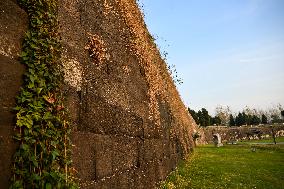
(231113) -- NANJING, Nov. 13, 2023 (Xinhua) -- This photo taken on Nov. 8, 2023 shows a historical stone wall, a part of Hongze Lake Irrigation System in Huai'an, east China's Jiangsu Province. The Hongze Lake Irrigation System in eastern Jiangsu Province is a water storage irrigation area. Since the Eastern Han Dynasty (25-220), ancient people have diverted water for irrigation and farming. The irrigation system, which has been designated as World Heritage Irrigation Structures (WHIS) in 2023, nowadays keeps irrigating farmland. (Xinhua/Ji Chunpeng)

  •  
CHINA-TIBET-GUGE KINGDOM-SCENERY (CN)

CHINA-TIBET-GUGE KINGDOM-SCENERY (CN)

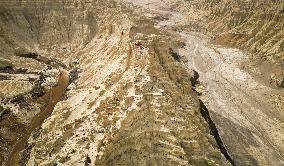
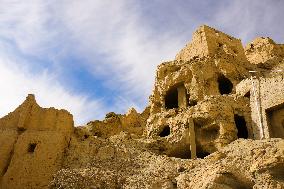
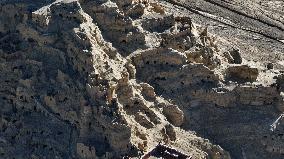
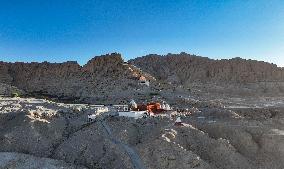
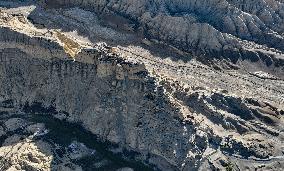
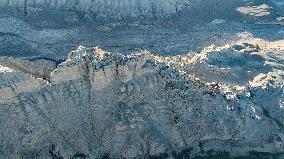
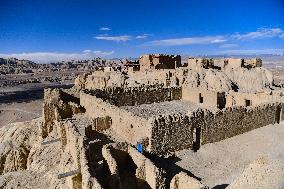
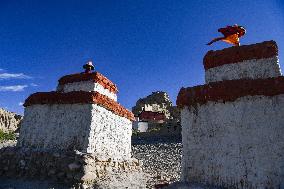
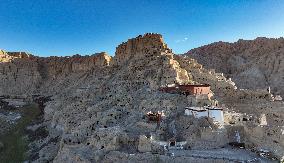
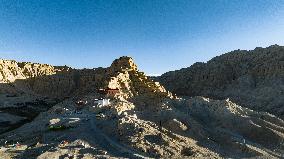
(231105) -- NGARI, Nov. 5, 2023 (Xinhua) -- This aerial photo taken on Nov. 3, 2023 shows the scenery of the ruins of the Guge Kingdom in Zanda County of Ngari Prefecture, southwest China's Tibet Autonomous Region. The ancient Guge Kingdom was probably founded in the 10th century but it was abandoned by the end of the 17th century. Only the mud-and-rock structures remained, sheltering their relics and wall paintings from the elements. (Xinhua/Nie Yi)

  •  
CHINA-TIBET-GUGE KINGDOM-SCENERY (CN)

CHINA-TIBET-GUGE KINGDOM-SCENERY (CN)

(231105) -- NGARI, Nov. 5, 2023 (Xinhua) -- This aerial photo taken on Nov. 3, 2023 shows the scenery of the ruins of the Guge Kingdom in Zanda County of Ngari Prefecture, southwest China's Tibet Autonomous Region. The ancient Guge Kingdom was probably founded in the 10th century but it was abandoned by the end of the 17th century. Only the mud-and-rock structures remained, sheltering their relics and wall paintings from the elements. (Xinhua/Chen Shangcai)

  •  
CHINA-TIBET-GUGE KINGDOM-SCENERY (CN)

CHINA-TIBET-GUGE KINGDOM-SCENERY (CN)

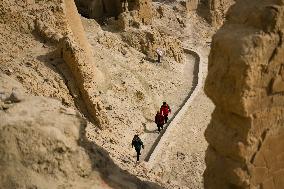
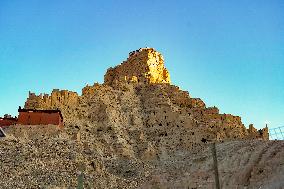
(231105) -- NGARI, Nov. 5, 2023 (Xinhua) -- People visit the ruins of the Guge Kingdom in Zanda County of Ngari Prefecture, southwest China's Tibet Autonomous Region, Nov. 3, 2023. The ancient Guge Kingdom was probably founded in the 10th century but it was abandoned by the end of the 17th century. Only the mud-and-rock structures remained, sheltering their relics and wall paintings from the elements. (Xinhua/Cao Bin)

  •  
CHINA-TIBET-GUGE KINGDOM-SCENERY (CN)

CHINA-TIBET-GUGE KINGDOM-SCENERY (CN)

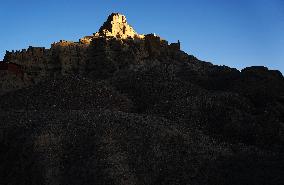
(231105) -- NGARI, Nov. 5, 2023 (Xinhua) -- This photo taken on Nov. 3, 2023 shows the scenery of the ruins of the Guge Kingdom in Zanda County of Ngari Prefecture, southwest China's Tibet Autonomous Region. The ancient Guge Kingdom was probably founded in the 10th century but it was abandoned by the end of the 17th century. Only the mud-and-rock structures remained, sheltering their relics and wall paintings from the elements. (Xinhua/Chen Shangcai)

  •  
CHINA-TIBET-ZANDA-GUGE KINGDOM-SCENERY (CN)

CHINA-TIBET-ZANDA-GUGE KINGDOM-SCENERY (CN)

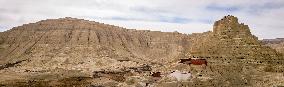
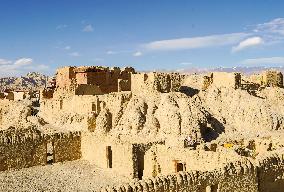
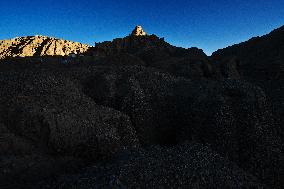
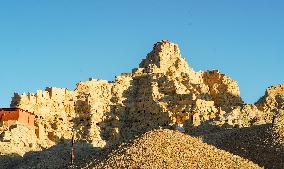
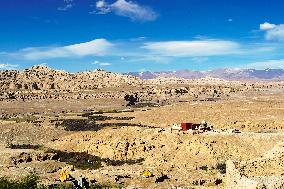
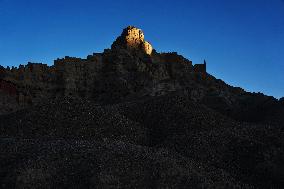
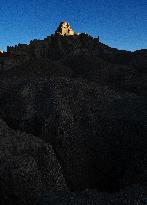
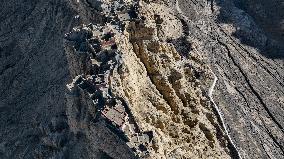
(230527) -- ZANDA, May 27, 2023 (Xinhua) -- This aerial photo taken on May 26, 2023 shows the scenery of the ruins of the Guge Kingdom at dusk in Zanda County of Ngari Prefecture, southwest China's Tibet Autonomous Region. The ancient Guge Kingdom was probably founded in the 10th century but it was abandoned by the end of the 17th century. Only the mud-and-rock structures remained, sheltering their relics and wall paintings from the elements. The Guge Kingdom Ruins are among the first group of historical relics placed under state protection in China. Remains of the kingdom's main castle now lie atop a riverside mountain, covering 180,000 square meters. (Xinhua/Jigme Dorje)

  •  
CHINA-TIBET-ZANDA-GUGE KINGDOM-SCENERY (CN)

CHINA-TIBET-ZANDA-GUGE KINGDOM-SCENERY (CN)

(230527) -- ZANDA, May 27, 2023 (Xinhua) -- This photo taken on May 26, 2023 shows the scenery of the ruins of the Guge Kingdom at dusk in Zanda County of Ngari Prefecture, southwest China's Tibet Autonomous Region. The ancient Guge Kingdom was probably founded in the 10th century but it was abandoned by the end of the 17th century. Only the mud-and-rock structures remained, sheltering their relics and wall paintings from the elements. The Guge Kingdom Ruins are among the first group of historical relics placed under state protection in China. Remains of the kingdom's main castle now lie atop a riverside mountain, covering 180,000 square meters. (Xinhua/Shao Zedong)

  •  
CHINA-TIBET-ZANDA-GUGE KINGDOM-SCENERY (CN)

CHINA-TIBET-ZANDA-GUGE KINGDOM-SCENERY (CN)

(230527) -- ZANDA, May 27, 2023 (Xinhua) -- This photo taken on May 26, 2023 shows the scenery of the ruins of the Guge Kingdom at dusk in Zanda County of Ngari Prefecture, southwest China's Tibet Autonomous Region. The ancient Guge Kingdom was probably founded in the 10th century but it was abandoned by the end of the 17th century. Only the mud-and-rock structures remained, sheltering their relics and wall paintings from the elements. The Guge Kingdom Ruins are among the first group of historical relics placed under state protection in China. Remains of the kingdom's main castle now lie atop a riverside mountain, covering 180,000 square meters. (Xinhua/Fei Maohua)

  •  
CHINA-TIBET-ZANDA-GUGE KINGDOM-SCENERY (CN)

CHINA-TIBET-ZANDA-GUGE KINGDOM-SCENERY (CN)

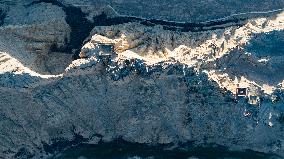
(230527) -- ZANDA, May 27, 2023 (Xinhua) -- This aerial photo taken on May 26, 2023 shows the scenery of the ruins of the Guge Kingdom at dusk in Zanda County of Ngari Prefecture, southwest China's Tibet Autonomous Region. The ancient Guge Kingdom was probably founded in the 10th century but it was abandoned by the end of the 17th century. Only the mud-and-rock structures remained, sheltering their relics and wall paintings from the elements. The Guge Kingdom Ruins are among the first group of historical relics placed under state protection in China. Remains of the kingdom's main castle now lie atop a riverside mountain, covering 180,000 square meters. (Xinhua/Jigme Dorje)

  •  
CHINA-TIBET-ZANDA-GUGE KINGDOM-SCENERY (CN)

CHINA-TIBET-ZANDA-GUGE KINGDOM-SCENERY (CN)

(230527) -- ZANDA, May 27, 2023 (Xinhua) -- This aerial photo taken on May 26, 2023 shows the scenery of the ruins of the Guge Kingdom at dusk in Zanda County of Ngari Prefecture, southwest China's Tibet Autonomous Region. The ancient Guge Kingdom was probably founded in the 10th century but it was abandoned by the end of the 17th century. Only the mud-and-rock structures remained, sheltering their relics and wall paintings from the elements. The Guge Kingdom Ruins are among the first group of historical relics placed under state protection in China. Remains of the kingdom's main castle now lie atop a riverside mountain, covering 180,000 square meters. (Xinhua/Yang Zhisen)

  •  
CHINA-TIBET-ZANDA-GUGE KINGDOM-SCENERY (CN)

CHINA-TIBET-ZANDA-GUGE KINGDOM-SCENERY (CN)

(230527) -- ZANDA, May 27, 2023 (Xinhua) -- This aerial photo taken on May 26, 2023 shows the scenery of the ruins of the Guge Kingdom at dusk in Zanda County of Ngari Prefecture, southwest China's Tibet Autonomous Region. The ancient Guge Kingdom was probably founded in the 10th century but it was abandoned by the end of the 17th century. Only the mud-and-rock structures remained, sheltering their relics and wall paintings from the elements. The Guge Kingdom Ruins are among the first group of historical relics placed under state protection in China. Remains of the kingdom's main castle now lie atop a riverside mountain, covering 180,000 square meters. (Xinhua/Yang Zhisen)

  •  
CHINA-TIBET-ZANDA-GUGE KINGDOM-SCENERY (CN)

CHINA-TIBET-ZANDA-GUGE KINGDOM-SCENERY (CN)

(230527) -- ZANDA, May 27, 2023 (Xinhua) -- This photo taken on May 26, 2023 shows the scenery of the ruins of the Guge Kingdom at dusk in Zanda County of Ngari Prefecture, southwest China's Tibet Autonomous Region. The ancient Guge Kingdom was probably founded in the 10th century but it was abandoned by the end of the 17th century. Only the mud-and-rock structures remained, sheltering their relics and wall paintings from the elements. The Guge Kingdom Ruins are among the first group of historical relics placed under state protection in China. Remains of the kingdom's main castle now lie atop a riverside mountain, covering 180,000 square meters. (Xinhua/Jigme Dorje)

  •  
CHINA-TIBET-ZANDA-GUGE KINGDOM-SCENERY (CN)

CHINA-TIBET-ZANDA-GUGE KINGDOM-SCENERY (CN)

(230527) -- ZANDA, May 27, 2023 (Xinhua) -- This photo taken on May 26, 2023 shows the scenery of the ruins of the Guge Kingdom at dusk in Zanda County of Ngari Prefecture, southwest China's Tibet Autonomous Region. The ancient Guge Kingdom was probably founded in the 10th century but it was abandoned by the end of the 17th century. Only the mud-and-rock structures remained, sheltering their relics and wall paintings from the elements. The Guge Kingdom Ruins are among the first group of historical relics placed under state protection in China. Remains of the kingdom's main castle now lie atop a riverside mountain, covering 180,000 square meters. (Xinhua/Yang Zhisen)

  •  
CHINA-TIBET-ZANDA-GUGE KINGDOM-SCENERY (CN)

CHINA-TIBET-ZANDA-GUGE KINGDOM-SCENERY (CN)

(230527) -- ZANDA, May 27, 2023 (Xinhua) -- This photo taken on May 26, 2023 shows the scenery of the ruins of the Guge Kingdom at dusk in Zanda County of Ngari Prefecture, southwest China's Tibet Autonomous Region. The ancient Guge Kingdom was probably founded in the 10th century but it was abandoned by the end of the 17th century. Only the mud-and-rock structures remained, sheltering their relics and wall paintings from the elements. The Guge Kingdom Ruins are among the first group of historical relics placed under state protection in China. Remains of the kingdom's main castle now lie atop a riverside mountain, covering 180,000 square meters. (Xinhua/Jigme Dorje)

  •  
CHINA-TIBET-ZANDA-GUGE KINGDOM-SCENERY (CN)

CHINA-TIBET-ZANDA-GUGE KINGDOM-SCENERY (CN)

(230527) -- ZANDA, May 27, 2023 (Xinhua) -- This photo taken on May 26, 2023 shows the scenery of the ruins of the Guge Kingdom at dusk in Zanda County of Ngari Prefecture, southwest China's Tibet Autonomous Region. The ancient Guge Kingdom was probably founded in the 10th century but it was abandoned by the end of the 17th century. Only the mud-and-rock structures remained, sheltering their relics and wall paintings from the elements. The Guge Kingdom Ruins are among the first group of historical relics placed under state protection in China. Remains of the kingdom's main castle now lie atop a riverside mountain, covering 180,000 square meters. (Xinhua/Shao Zedong)

  •  
CHINA-TIBET-ZANDA-GUGE KINGDOM-SCENERY (CN)

CHINA-TIBET-ZANDA-GUGE KINGDOM-SCENERY (CN)

(230527) -- ZANDA, May 27, 2023 (Xinhua) -- This photo taken on May 26, 2023 shows the scenery of the ruins of the Guge Kingdom at dusk in Zanda County of Ngari Prefecture, southwest China's Tibet Autonomous Region. The ancient Guge Kingdom was probably founded in the 10th century but it was abandoned by the end of the 17th century. Only the mud-and-rock structures remained, sheltering their relics and wall paintings from the elements. The Guge Kingdom Ruins are among the first group of historical relics placed under state protection in China. Remains of the kingdom's main castle now lie atop a riverside mountain, covering 180,000 square meters. (Xinhua/Shao Zedong)

  •  
CHINA-TIBET-ZANDA-GUGE KINGDOM-SCENERY (CN)

CHINA-TIBET-ZANDA-GUGE KINGDOM-SCENERY (CN)

(230527) -- ZANDA, May 27, 2023 (Xinhua) -- This photo taken on May 26, 2023 shows the scenery of the ruins of the Guge Kingdom at dusk in Zanda County of Ngari Prefecture, southwest China's Tibet Autonomous Region. The ancient Guge Kingdom was probably founded in the 10th century but it was abandoned by the end of the 17th century. Only the mud-and-rock structures remained, sheltering their relics and wall paintings from the elements. The Guge Kingdom Ruins are among the first group of historical relics placed under state protection in China. Remains of the kingdom's main castle now lie atop a riverside mountain, covering 180,000 square meters. (Xinhua/Fei Maohua)

  •  
CHINA-TIBET-ZANDA-GUGE KINGDOM-SCENERY (CN)

CHINA-TIBET-ZANDA-GUGE KINGDOM-SCENERY (CN)

(230527) -- ZANDA, May 27, 2023 (Xinhua) -- This photo taken on May 26, 2023 shows the scenery of the ruins of the Guge Kingdom at dusk in Zanda County of Ngari Prefecture, southwest China's Tibet Autonomous Region. The ancient Guge Kingdom was probably founded in the 10th century but it was abandoned by the end of the 17th century. Only the mud-and-rock structures remained, sheltering their relics and wall paintings from the elements. The Guge Kingdom Ruins are among the first group of historical relics placed under state protection in China. Remains of the kingdom's main castle now lie atop a riverside mountain, covering 180,000 square meters. (Xinhua/Fei Maohua)

  •  
CHINA-TIBET-ZANDA-GUGE KINGDOM-SCENERY (CN)

CHINA-TIBET-ZANDA-GUGE KINGDOM-SCENERY (CN)

(230527) -- ZANDA, May 27, 2023 (Xinhua) -- This aerial photo taken on May 26, 2023 shows the scenery of the ruins of the Guge Kingdom at dusk in Zanda County of Ngari Prefecture, southwest China's Tibet Autonomous Region. The ancient Guge Kingdom was probably founded in the 10th century but it was abandoned by the end of the 17th century. Only the mud-and-rock structures remained, sheltering their relics and wall paintings from the elements. The Guge Kingdom Ruins are among the first group of historical relics placed under state protection in China. Remains of the kingdom's main castle now lie atop a riverside mountain, covering 180,000 square meters. (Xinhua/Jigme Dorje)

  •  
CHINA-TIBET-ZANDA-GUGE KINGDOM-SCENERY (CN)

CHINA-TIBET-ZANDA-GUGE KINGDOM-SCENERY (CN)

(230527) -- ZANDA, May 27, 2023 (Xinhua) -- This aerial photo taken on May 26, 2023 shows the scenery of the ruins of the Guge Kingdom at dusk in Zanda County of Ngari Prefecture, southwest China's Tibet Autonomous Region. The ancient Guge Kingdom was probably founded in the 10th century but it was abandoned by the end of the 17th century. Only the mud-and-rock structures remained, sheltering their relics and wall paintings from the elements. The Guge Kingdom Ruins are among the first group of historical relics placed under state protection in China. Remains of the kingdom's main castle now lie atop a riverside mountain, covering 180,000 square meters. (Xinhua/Jigme Dorje)

  •  
CHINA-TIBET-ZANDA-GUGE KINGDOM-SCENERY (CN)

CHINA-TIBET-ZANDA-GUGE KINGDOM-SCENERY (CN)

(230527) -- ZANDA, May 27, 2023 (Xinhua) -- This photo taken on May 26, 2023 shows the scenery of the ruins of the Guge Kingdom at dusk in Zanda County of Ngari Prefecture, southwest China's Tibet Autonomous Region. The ancient Guge Kingdom was probably founded in the 10th century but it was abandoned by the end of the 17th century. Only the mud-and-rock structures remained, sheltering their relics and wall paintings from the elements. The Guge Kingdom Ruins are among the first group of historical relics placed under state protection in China. Remains of the kingdom's main castle now lie atop a riverside mountain, covering 180,000 square meters. (Xinhua/Jigme Dorje)

  •  
CHINA-TIBET-ZANDA-GUGE KINGDOM-SCENERY (CN)

CHINA-TIBET-ZANDA-GUGE KINGDOM-SCENERY (CN)

(230527) -- ZANDA, May 27, 2023 (Xinhua) -- This photo taken on May 26, 2023 shows the scenery of the ruins of the Guge Kingdom at dusk in Zanda County of Ngari Prefecture, southwest China's Tibet Autonomous Region. The ancient Guge Kingdom was probably founded in the 10th century but it was abandoned by the end of the 17th century. Only the mud-and-rock structures remained, sheltering their relics and wall paintings from the elements. The Guge Kingdom Ruins are among the first group of historical relics placed under state protection in China. Remains of the kingdom's main castle now lie atop a riverside mountain, covering 180,000 square meters. (Xinhua/Fei Maohua)

  •  
CHINA-TIBET-ZANDA-GUGE KINGDOM-SCENERY (CN)

CHINA-TIBET-ZANDA-GUGE KINGDOM-SCENERY (CN)

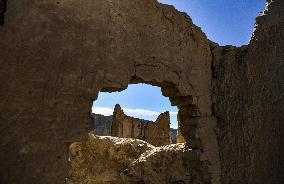
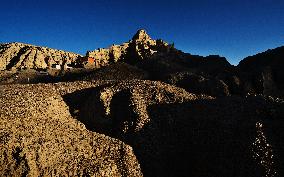
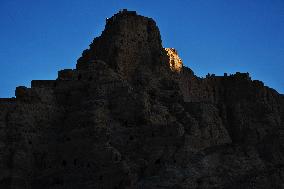
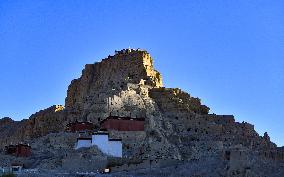
(230527) -- ZANDA, May 27, 2023 (Xinhua) -- This photo taken on May 26, 2023 shows the sunset glow illuminating the ruins of the Guge Kingdom at dusk in Zanda County of Ngari Prefecture, southwest China's Tibet Autonomous Region. The ancient Guge Kingdom was probably founded in the 10th century but it was abandoned by the end of the 17th century. Only the mud-and-rock structures remained, sheltering their relics and wall paintings from the elements. The Guge Kingdom Ruins are among the first group of historical relics placed under state protection in China. Remains of the kingdom's main castle now lie atop a riverside mountain, covering 180,000 square meters. (Xinhua/Fei Maohua)

  •  
CHINA-TIBET-ZANDA-GUGE KINGDOM-SCENERY (CN)

CHINA-TIBET-ZANDA-GUGE KINGDOM-SCENERY (CN)

(230527) -- ZANDA, May 27, 2023 (Xinhua) -- This photo taken on May 26, 2023 shows the scenery of the ruins of the Guge Kingdom at dusk in Zanda County of Ngari Prefecture, southwest China's Tibet Autonomous Region. The ancient Guge Kingdom was probably founded in the 10th century but it was abandoned by the end of the 17th century. Only the mud-and-rock structures remained, sheltering their relics and wall paintings from the elements. The Guge Kingdom Ruins are among the first group of historical relics placed under state protection in China. Remains of the kingdom's main castle now lie atop a riverside mountain, covering 180,000 square meters. (Xinhua/Jigme Dorje)

  •  
CHINA-TIBET-ZANDA-GUGE KINGDOM-SCENERY (CN)

CHINA-TIBET-ZANDA-GUGE KINGDOM-SCENERY (CN)

(230527) -- ZANDA, May 27, 2023 (Xinhua) -- This aerial photo taken on May 26, 2023 shows the scenery of the ruins of the Guge Kingdom at dusk in Zanda County of Ngari Prefecture, southwest China's Tibet Autonomous Region. The ancient Guge Kingdom was probably founded in the 10th century but it was abandoned by the end of the 17th century. Only the mud-and-rock structures remained, sheltering their relics and wall paintings from the elements. The Guge Kingdom Ruins are among the first group of historical relics placed under state protection in China. Remains of the kingdom's main castle now lie atop a riverside mountain, covering 180,000 square meters. (Xinhua/Jigme Dorje)

  •  
CHINA-TIBET-ZANDA-GUGE KINGDOM-SCENERY (CN)

CHINA-TIBET-ZANDA-GUGE KINGDOM-SCENERY (CN)

(230527) -- ZANDA, May 27, 2023 (Xinhua) -- This photo taken on May 26, 2023 shows the scenery of the ruins of the Guge Kingdom at dusk in Zanda County of Ngari Prefecture, southwest China's Tibet Autonomous Region. The ancient Guge Kingdom was probably founded in the 10th century but it was abandoned by the end of the 17th century. Only the mud-and-rock structures remained, sheltering their relics and wall paintings from the elements. The Guge Kingdom Ruins are among the first group of historical relics placed under state protection in China. Remains of the kingdom's main castle now lie atop a riverside mountain, covering 180,000 square meters. (Xinhua/Fei Maohua)

  •  
CHINA-TIBET-ZANDA-GUGE KINGDOM-SCENERY (CN)

CHINA-TIBET-ZANDA-GUGE KINGDOM-SCENERY (CN)

(230527) -- ZANDA, May 27, 2023 (Xinhua) -- This photo taken on May 26, 2023 shows the scenery of the ruins of the Guge Kingdom at dusk in Zanda County of Ngari Prefecture, southwest China's Tibet Autonomous Region. The ancient Guge Kingdom was probably founded in the 10th century but it was abandoned by the end of the 17th century. Only the mud-and-rock structures remained, sheltering their relics and wall paintings from the elements. The Guge Kingdom Ruins are among the first group of historical relics placed under state protection in China. Remains of the kingdom's main castle now lie atop a riverside mountain, covering 180,000 square meters. (Xinhua/Shao Zedong)

  •  
CHINA-TIBET-ZANDA-GUGE KINGDOM-SCENERY (CN)

CHINA-TIBET-ZANDA-GUGE KINGDOM-SCENERY (CN)

(230527) -- ZANDA, May 27, 2023 (Xinhua) -- This aerial photo taken on May 26, 2023 shows the scenery of the ruins of the Guge Kingdom at dusk in Zanda County of Ngari Prefecture, southwest China's Tibet Autonomous Region. The ancient Guge Kingdom was probably founded in the 10th century but it was abandoned by the end of the 17th century. Only the mud-and-rock structures remained, sheltering their relics and wall paintings from the elements. The Guge Kingdom Ruins are among the first group of historical relics placed under state protection in China. Remains of the kingdom's main castle now lie atop a riverside mountain, covering 180,000 square meters. (Xinhua/Jigme Dorje)

  •  
CHINA-XINJIANG-TURPAN-KAREZ (CN)

CHINA-XINJIANG-TURPAN-KAREZ (CN)

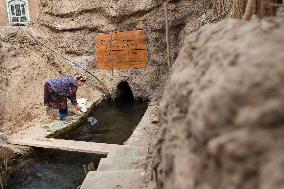
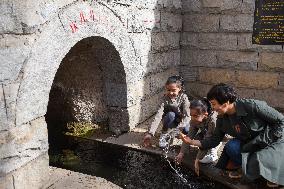
(230320) -- URUMQI, March 20, 2023 (Xinhua) -- A resident fetches water from the outlet of a karez well in Turpan, northwest China's Xinjiang Uygur Autonomous Region, March 7, 2023. Located at the southern foot of the Tianshan Mountains, Turpan in Xinjiang Uygur Autonomous Region is one of the driest and hottest places in China, with an average annual precipitation of only 16 millimeters and evaporation of up to 3,000 millimeters. In order to make this vast Gobi into a comfortable and livable oasis, the local people found new way as water reserve in karez well, an invention that provides water source from generations on. The karez wells consists of vertical shafts and subterranean canals that surface in the form of ditches and small ponds. The karez irrigation system, composed of vertical shafts, subterranean and ground canals, and small reservoirs, was built 2,000 years ago and is considered one of China's greatest surviving ancient man-made structures, along with the Great Wall and the Grand Canal. O

  •  
CHINA-XINJIANG-TURPAN-KAREZ (CN)

CHINA-XINJIANG-TURPAN-KAREZ (CN)

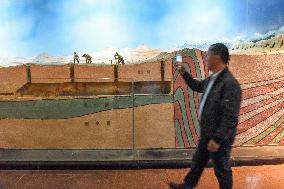
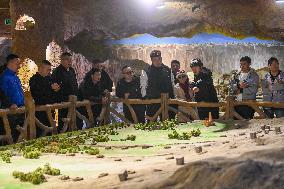
(230320) -- URUMQI, March 20, 2023 (Xinhua) -- A tourist views a model of karez wells at a scenic spot of karez wells in Turpan, northwest China's Xinjiang Uygur Autonomous Region, March 11, 2023. Located at the southern foot of the Tianshan Mountains, Turpan in Xinjiang Uygur Autonomous Region is one of the driest and hottest places in China, with an average annual precipitation of only 16 millimeters and evaporation of up to 3,000 millimeters. In order to make this vast Gobi into a comfortable and livable oasis, the local people found new way as water reserve in karez well, an invention that provides water source from generations on. The karez wells consists of vertical shafts and subterranean canals that surface in the form of ditches and small ponds. The karez irrigation system, composed of vertical shafts, subterranean and ground canals, and small reservoirs, was built 2,000 years ago and is considered one of China's greatest surviving ancient man-made structures, along with the Great Wall and the Gra

  •  
CHINA-XINJIANG-TURPAN-KAREZ (CN)

CHINA-XINJIANG-TURPAN-KAREZ (CN)

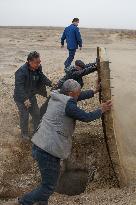
(230320) -- URUMQI, March 20, 2023 (Xinhua) -- Dredging workers open the cover of a vertical shaft of a karez well in Turpan, northwest China's Xinjiang Uygur Autonomous Region, March 9, 2023. Located at the southern foot of the Tianshan Mountains, Turpan in Xinjiang Uygur Autonomous Region is one of the driest and hottest places in China, with an average annual precipitation of only 16 millimeters and evaporation of up to 3,000 millimeters. In order to make this vast Gobi into a comfortable and livable oasis, the local people found new way as water reserve in karez well, an invention that provides water source from generations on. The karez wells consists of vertical shafts and subterranean canals that surface in the form of ditches and small ponds. The karez irrigation system, composed of vertical shafts, subterranean and ground canals, and small reservoirs, was built 2,000 years ago and is considered one of China's greatest surviving ancient man-made structures, along with the Great Wall and the Grand C

  •  
CHINA-XINJIANG-TURPAN-KAREZ (CN)

CHINA-XINJIANG-TURPAN-KAREZ (CN)

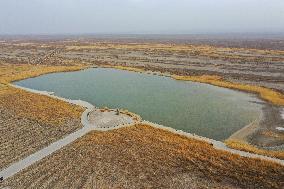
(230320) -- URUMQI, March 20, 2023 (Xinhua) -- This photo taken on March 7, 2023 shows the view of Aydingkol Lake in Turpan, northwest China's Xinjiang Uygur Autonomous Region. Located at the southern foot of the Tianshan Mountains, Turpan in Xinjiang Uygur Autonomous Region is one of the driest and hottest places in China, with an average annual precipitation of only 16 millimeters and evaporation of up to 3,000 millimeters. In order to make this vast Gobi into a comfortable and livable oasis, the local people found new way as water reserve in karez well, an invention that provides water source from generations on. The karez wells consists of vertical shafts and subterranean canals that surface in the form of ditches and small ponds. The karez irrigation system, composed of vertical shafts, subterranean and ground canals, and small reservoirs, was built 2,000 years ago and is considered one of China's greatest surviving ancient man-made structures, along with the Great Wall and the Grand Canal. Over t

  •  
CHINA-XINJIANG-TURPAN-KAREZ (CN)

CHINA-XINJIANG-TURPAN-KAREZ (CN)

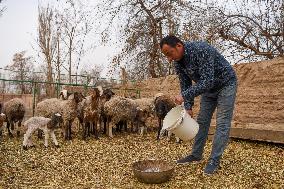
(230320) -- URUMQI, March 20, 2023 (Xinhua) -- A farmer pours water fetched from karez wells to feed sheep in Turpan, northwest China's Xinjiang Uygur Autonomous Region, March 7, 2023. Located at the southern foot of the Tianshan Mountains, Turpan in Xinjiang Uygur Autonomous Region is one of the driest and hottest places in China, with an average annual precipitation of only 16 millimeters and evaporation of up to 3,000 millimeters. In order to make this vast Gobi into a comfortable and livable oasis, the local people found new way as water reserve in karez well, an invention that provides water source from generations on. The karez wells consists of vertical shafts and subterranean canals that surface in the form of ditches and small ponds. The karez irrigation system, composed of vertical shafts, subterranean and ground canals, and small reservoirs, was built 2,000 years ago and is considered one of China's greatest surviving ancient man-made structures, along with the Great Wall and the Grand Canal.

  •  
CHINA-XINJIANG-TURPAN-KAREZ (CN)

CHINA-XINJIANG-TURPAN-KAREZ (CN)

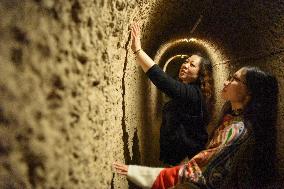
(230320) -- URUMQI, March 20, 2023 (Xinhua) -- Tourists visit a folk park of karez wells in Turpan, northwest China's Xinjiang Uygur Autonomous Region, March 12, 2023. Located at the southern foot of the Tianshan Mountains, Turpan in Xinjiang Uygur Autonomous Region is one of the driest and hottest places in China, with an average annual precipitation of only 16 millimeters and evaporation of up to 3,000 millimeters. In order to make this vast Gobi into a comfortable and livable oasis, the local people found new way as water reserve in karez well, an invention that provides water source from generations on. The karez wells consists of vertical shafts and subterranean canals that surface in the form of ditches and small ponds. The karez irrigation system, composed of vertical shafts, subterranean and ground canals, and small reservoirs, was built 2,000 years ago and is considered one of China's greatest surviving ancient man-made structures, along with the Great Wall and the Grand Canal. Over the years,

  •  
CHINA-XINJIANG-TURPAN-KAREZ (CN)

CHINA-XINJIANG-TURPAN-KAREZ (CN)

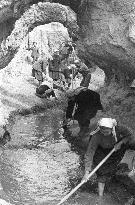
(230320) -- URUMQI, March 20, 2023 (Xinhua) -- This file photo taken in 1963 shows people maintaining a karez well in Turpan, northwest China's Xinjiang Uygur Autonomous Region. Located at the southern foot of the Tianshan Mountains, Turpan in Xinjiang Uygur Autonomous Region is one of the driest and hottest places in China, with an average annual precipitation of only 16 millimeters and evaporation of up to 3,000 millimeters. In order to make this vast Gobi into a comfortable and livable oasis, the local people found new way as water reserve in karez well, an invention that provides water source from generations on. The karez wells consists of vertical shafts and subterranean canals that surface in the form of ditches and small ponds. The karez irrigation system, composed of vertical shafts, subterranean and ground canals, and small reservoirs, was built 2,000 years ago and is considered one of China's greatest surviving ancient man-made structures, along with the Great Wall and the Grand Canal. Over

  •  
CHINA-XINJIANG-TURPAN-KAREZ (CN)

CHINA-XINJIANG-TURPAN-KAREZ (CN)

(230320) -- URUMQI, March 20, 2023 (Xinhua) -- Tourists visit a scenic spot of karez wells in Turpan, northwest China's Xinjiang Uygur Autonomous Region, March 11, 2023. Located at the southern foot of the Tianshan Mountains, Turpan in Xinjiang Uygur Autonomous Region is one of the driest and hottest places in China, with an average annual precipitation of only 16 millimeters and evaporation of up to 3,000 millimeters. In order to make this vast Gobi into a comfortable and livable oasis, the local people found new way as water reserve in karez well, an invention that provides water source from generations on. The karez wells consists of vertical shafts and subterranean canals that surface in the form of ditches and small ponds. The karez irrigation system, composed of vertical shafts, subterranean and ground canals, and small reservoirs, was built 2,000 years ago and is considered one of China's greatest surviving ancient man-made structures, along with the Great Wall and the Grand Canal. Over the year

  •  
CHINA-XINJIANG-TURPAN-KAREZ (CN)

CHINA-XINJIANG-TURPAN-KAREZ (CN)

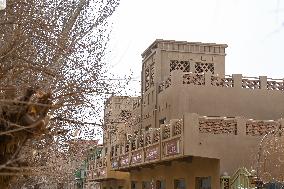
(230320) -- URUMQI, March 20, 2023 (Xinhua) -- This photo taken on March 11, 2023 shows a folk house in Turpan, northwest China's Xinjiang Uygur Autonomous Region. Located at the southern foot of the Tianshan Mountains, Turpan in Xinjiang Uygur Autonomous Region is one of the driest and hottest places in China, with an average annual precipitation of only 16 millimeters and evaporation of up to 3,000 millimeters. In order to make this vast Gobi into a comfortable and livable oasis, the local people found new way as water reserve in karez well, an invention that provides water source from generations on. The karez wells consists of vertical shafts and subterranean canals that surface in the form of ditches and small ponds. The karez irrigation system, composed of vertical shafts, subterranean and ground canals, and small reservoirs, was built 2,000 years ago and is considered one of China's greatest surviving ancient man-made structures, along with the Great Wall and the Grand Canal. Over the years, the

  •  
CHINA-XINJIANG-TURPAN-KAREZ (CN)

CHINA-XINJIANG-TURPAN-KAREZ (CN)

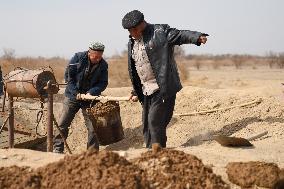
(230320) -- URUMQI, March 20, 2023 (Xinhua) -- Dredging workers dump mud from a karez well in Turpan, northwest China's Xinjiang Uygur Autonomous Region, March 9, 2023. Located at the southern foot of the Tianshan Mountains, Turpan in Xinjiang Uygur Autonomous Region is one of the driest and hottest places in China, with an average annual precipitation of only 16 millimeters and evaporation of up to 3,000 millimeters. In order to make this vast Gobi into a comfortable and livable oasis, the local people found new way as water reserve in karez well, an invention that provides water source from generations on. The karez wells consists of vertical shafts and subterranean canals that surface in the form of ditches and small ponds. The karez irrigation system, composed of vertical shafts, subterranean and ground canals, and small reservoirs, was built 2,000 years ago and is considered one of China's greatest surviving ancient man-made structures, along with the Great Wall and the Grand Canal. Over the years

  •  
CHINA-XINJIANG-TURPAN-KAREZ (CN)

CHINA-XINJIANG-TURPAN-KAREZ (CN)

(230320) -- URUMQI, March 20, 2023 (Xinhua) -- Tourists visit a scenic spot of karez wells in Turpan, northwest China's Xinjiang Uygur Autonomous Region, March 11, 2023. Located at the southern foot of the Tianshan Mountains, Turpan in Xinjiang Uygur Autonomous Region is one of the driest and hottest places in China, with an average annual precipitation of only 16 millimeters and evaporation of up to 3,000 millimeters. In order to make this vast Gobi into a comfortable and livable oasis, the local people found new way as water reserve in karez well, an invention that provides water source from generations on. The karez wells consists of vertical shafts and subterranean canals that surface in the form of ditches and small ponds. The karez irrigation system, composed of vertical shafts, subterranean and ground canals, and small reservoirs, was built 2,000 years ago and is considered one of China's greatest surviving ancient man-made structures, along with the Great Wall and the Grand Canal. Over the year

  • Main
  • Top
  • Editorial
  • Creative
  • About Us
  • About ILG
  • Terms of use
  • Company
  • BEHIND
  • Price List
  • Single Plan
  • Monthly Plan
  • Services
  • Shooting
  • Rights Clearance
  • Support
  • FAQ
  • How To Buy
  • Contact Us
  • Become a Partner

© KYODO NEWS IMAGES INC

All Rights Reserved.

  • Editorial
  • Olympics
  • News
  • Sports
  • Japan
  • Tech
  • Royal
  • Disaster
  • NorthKorea
  • Old Japan
  • SNS
  • Creative
  • Food
  • Japan
  • Landscape
  • Animal
  • Popular
  • #Ukraine
  • #China
  • #coronavirus
  • #N. Korea
  • #Thailand
  • #Russia
  • #Ukraine
  • #China
  • #coronavirus
  • #N. Korea
  • #Thailand
  • #Russia
  • Food
  • Japan
  • Landscape
  • Animal
  • Olympics
  • News
  • Sports
  • Japan
  • Tech
  • Royal
  • Disaster
  • NorthKorea
  • Old Japan
  • SNS